





Jim Norton T-Town Chevrolet

Blog

Blazer EV Sits Between Tulsa Trips: What Needs Service?

By Jim Norton T-Town Chevrolet

A Blazer EV that sits between Tulsa trips still needs tire checks, brake inspections and battery care, even with few miles on the odometer. Choose service around time, condition and the vehicle’s schedule when an electric SUV is your second car. Jim Norton T-Town Chevrolet supports that ownership pattern for drivers using the Broken Arrow Expressway during the week and a different vehicle for other days.
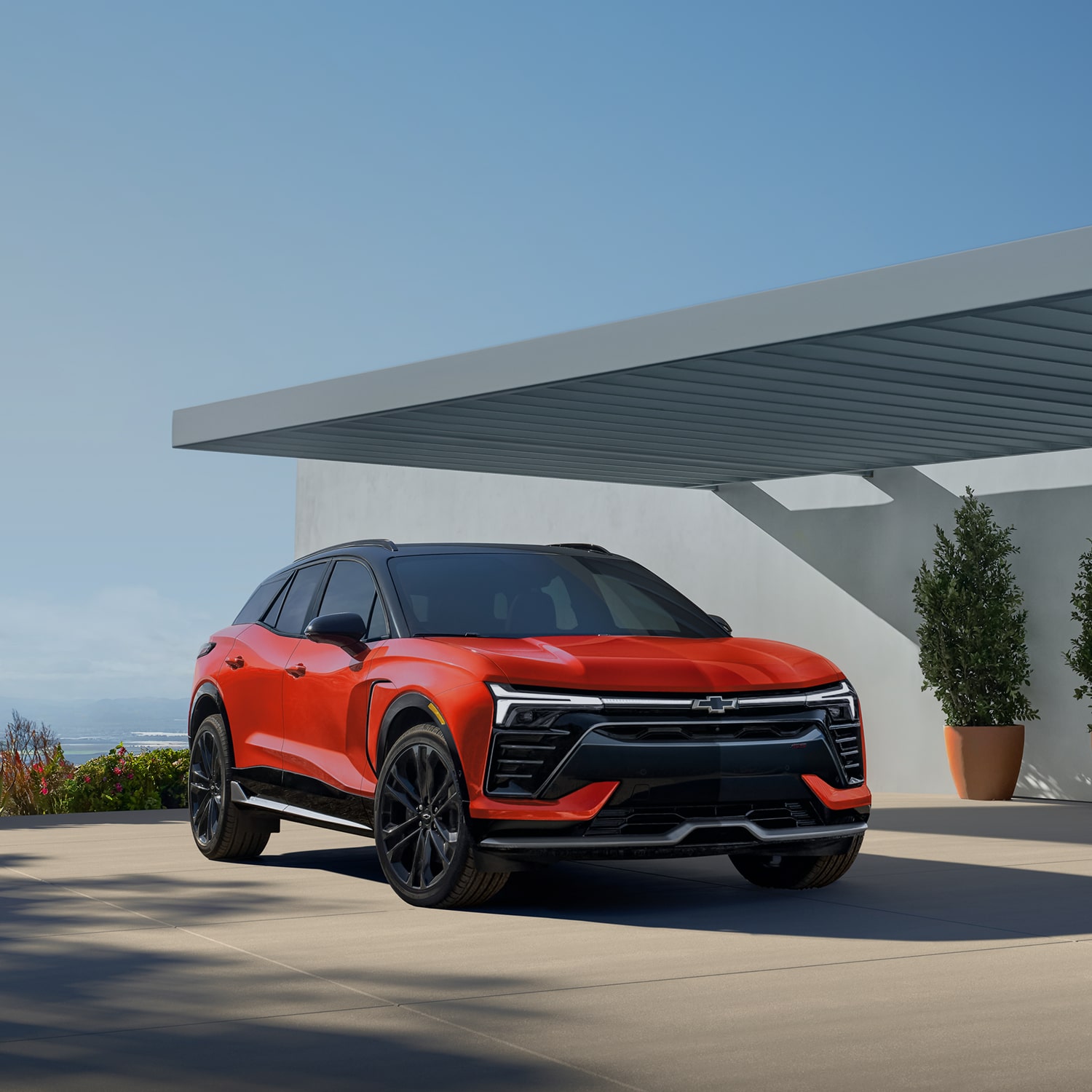
Chevrolet Blazer EV illustrating service for a vehicle that sits between Tulsa trips

Quick Answer

  • Tire rotation reference: 7,500 miles.
  • Long parking: tire deformation possible.
  • Stored charge: avoid either extreme.
  • Electric drive: no engine-oil service.

Low mileage changes the Tulsa service visit

A second car can spend most of the week parked, then do all the shopping and family driving in one afternoon. Tire pressures, brake surfaces and battery condition still matter on that first trip back onto South Memorial Drive. The service visit focuses on those items instead of selling an engine-oil change to a vehicle with electric propulsion.

The Blazer EV maintenance schedule provides the model-specific background. Time-based maintenance and visible wear continue while mileage accumulates slowly. A household in Broken Arrow using its EV for occasional trips has a different service pattern from a Glenpool commuter covering US-75 daily. The actual year’s owner instructions set the schedule for each vehicle.

Parked tires can create a first-drive vibration

A tire supports the vehicle’s weight through the same contact patch while parked. Michelin explains that tire materials can temporarily take a flatter shape there, creating vibration when the vehicle moves again. Temperature changes and the time spent sitting affect that behavior. Some temporary flat spotting eases as tires warm during use; persistent vibration needs a tire and wheel inspection.

For a Sand Springs owner, vibration immediately after several weeks parked has a different history from shaking that began after striking a road hazard. Service can separate tire deformation from wheel imbalance or damage. Proper cold inflation supports the load while parked and moving. The recommended pressure is on the vehicle label, and a tire’s sidewall maximum serves a different purpose.

Why the first drive can feel differentWhy the first drive can feel differentTires: a loaded contact patch while parkedRotors: less friction-brake use can permit surface rustBattery: charge and temperature affect regeneration

Regeneration leaves a job for the friction brakes

The Blazer EV uses regenerative braking to recover energy during deceleration, alongside conventional friction brakes. Less frequent use of the pads and rotors can allow rust to accumulate on rotor surfaces. Chevrolet’s EV care guidance recommends regular brake inspections and discusses cleaning calipers and rotors, which is particularly relevant when a vehicle spends substantial time parked.

A scraping sound on a first drive deserves attention when it persists, accompanies weak braking or comes with another warning. The T-Town Chevrolet service department can inspect the mechanical brake parts and fluid. Regeneration reduces some friction-brake work during driving, but the mechanical system still provides stopping capability when needed. The SUV needs both systems working correctly for ordinary traffic on the Broken Arrow Expressway.

Daily charging and extended parking are different

Chevrolet’s general EV guidance recommends a daily charging range of 20% to 80% and Level 2 charging for routine needs. A longer trip can justify charging beyond the everyday limit. Extended storage has its own instructions in the specific owner manual, including the appropriate charge target and whether the vehicle should remain plugged in. Storage at full or empty charge is discouraged.

For a Tulsa household leaving the SUV unused for weeks, the departure mileage is only one part of the battery-care decision. Parking location and access to charging matter too. Chevrolet recommends shade during hot weather where possible. High-voltage service belongs with qualified EV technicians; the Blazer EV ownership information connects that service need to the vehicle itself.

Service follows what the inspection findsService follows what the inspection findsVibration: tires, wheels and balanceBrake symptoms: pads, rotors, calipers and fluidDashboard alert: vehicle-specific diagnostic testing

A full battery can change slowing behavior

Chevrolet says regenerative braking can be limited when the battery is full or extremely hot or cold. A change in how strongly the vehicle slows after a charge can therefore have an operating explanation. The brake pedal remains the driver’s means of controlling a stop when regeneration is reduced. This matters when returning to the road after the EV has spent time parked and plugged in.

For a drive from Glenpool into Tulsa, the battery’s charge and temperature can differ between departure and arrival. That is separate from brake-pad wear or a mechanical fault. A persistent warning or loss of expected braking needs service. Factory diagnostic information helps the shop distinguish normal battery-related limits from a problem with the brakes or propulsion system.

What the low-use service bill can include

A parked-car inspection may lead to tire-pressure correction, tire service, brake cleaning or replacement of a worn part. Each job has different labor and materials. A vibration may need wheel testing, while a brake problem may need caliper or rotor work. The condition found during inspection determines the repair estimate; mileage alone gives an incomplete picture of those costs.

The service specials identify the work included in each offer. EV owners should match the actual service to the offer, because oil-change packages address gasoline-engine maintenance. The shop can also review time-based fluid and filter service for the specific Blazer EV. Routine care keeps the second car ready for a Sand Springs visit or the next US-75 commute.

Blazer EV service questions for Tulsa drivers

Does an electric Chevy still use coolant?

Yes. Chevrolet EV cooling systems regulate battery and electric-drive temperatures. Coolant service follows the specific model’s owner-manual timeline.

Will a cabin filter wear out if I drive fewer miles?

Cabin filtration still has a time-based service requirement as well as any mileage interval in the model schedule. Dust and debris collected by the filter also affect its condition.

Can I use an oil-change offer for an EV inspection?

The offer’s listed services determine eligibility. A battery-electric Blazer EV needs its own maintenance work, such as tire, brake, fluid and filter checks.

What does a dashboard EV warning mean after parking?

A propulsion or charging warning needs the vehicle’s diagnostic procedure. Chevrolet’s warning-light support covers equipment-specific alerts; qualified service can identify the affected system.

Where is T-Town Chevrolet for a Glenpool service visit?

The dealership is at 4924 S Memorial Dr, Tulsa, OK 74145. Call (918) 921-2100 or use the service scheduler for an appointment.

Jim Norton T-Town Chevrolet provides Chevrolet service for Tulsa, Broken Arrow, Sand Springs and Glenpool drivers, including care for electric SUVs used between longer periods of parking.

Recommended Posts

Tulsa Family Tahoe: Z71, Air Ride or Both?

By Jim Norton T-Town Chevrolet Choose a 2026 Tahoe Z71 for its four-wheel-drive hardware, and add available Four-Corner Air Ride Adaptive Suspension when easier passenger entry matters too. For a Tulsa family carrying children, grandparents and weekend gear, those are two separate buying decisions. Jim Norton T-Town Chevrolet can match that combination to daily Broken Arrow Expressway trips and weekends around Sand Springs. Key Numbers Transfer case: two-speed Autotrac. Passenger access: available lowering function. Z71 engine choices: three. Captain’s chairs: available second row. A tall SUV that still works for Tulsa families The Z71’s high-approach front fascia, aluminum skid plate and recovery hooks serve rougher ground. Its tubular assist steps serve a completely different task: getting people into the cabin. A family can want both sets of equipment. Children climbing into the second row and an older passenger entering the front seat use the step on ordinary trips, including a short errand along South Memorial Drive. The Tahoe model guide covers the full lineup. For this particular buyer, the Z71 is a starting point for traction and underbody hardware. Suspension options then decide whether the vehicle can lower for boarding and offer adjustable ride height. That separates the family-access decision from the SUV’s adventurous appearance. Air springs change height; dampers control movement Air Ride Adaptive Suspension uses air springs to raise or lower the vehicle. Magnetic Ride Control changes damping as the vehicle moves. They perform different jobs: one adjusts ride height, while the other manages suspension movement. Chevrolet offers Four-Corner Air Ride on Z71; High Country pairs standard Magnetic Ride Control with available Air Ride. A Glenpool household making repeated school and family trips may care most about the first job. Lowering the body at a stop can make the climb into a large SUV easier. Someone spending substantial time on the Creek Turnpike may also value the second job. Actual ride feel comes from the complete vehicle, including its tires, load and suspension equipment, so the two systems belong in the purchase conversation separately. Three parts of family access Three parts of family access Assist step: a foothold below the door Air springs: adjustable vehicle height Seat layout: the path into the third row Entry height helps at stops On equipped vehicles, the Entry/Exit setting lowers the body for boarding. Chevrolet also describes an automatic lowering function that works when the vehicle is placed in Park and Easy Exit is enabled. That is useful when the same Tahoe carries passengers with different reach and mobility needs during one day. The automatic function has operating limits. Chevrolet lists conditions such as an attached trailer, Tow/Haul mode and off-road settings that disable it. A family unloading near Keystone Lake while towing should expect a different situation from parking at home in Tulsa. Tubular steps remain useful when the air-suspension boarding feature is unavailable. The complete owner instructions govern the settings for the particular vehicle. Seating decides who gets the easy route inside Second-row captain’s chairs are available on the 2026 Tahoe Z71. They suit a family that wants separate second-row seats and a center passage to the third row. A bench serves households that need another seating position. The decision follows the people riding most often, including any child-restraint installation that occupies the second row. For a Broken Arrow household taking grandparents along, one useful arrangement puts the regular adult passengers in the more accessible rows and keeps the third row for the people who can reach it comfortably. Air Ride helps the step up into the vehicle; seat layout handles the movement through the cabin. The Tahoe questions page adds other seating and ownership details. Two daily uses for one Tahoe Two daily uses for one Tahoe Tulsa school trips: boarding and second-row access US-75 driving: engine and ride equipment Keystone Lake towing: load and trailering package Choose the engine around everyday use The 5.3L V8 is the standard Z71 engine. Chevrolet also offers the 6.2L V8 and 3.0L Duramax turbo-diesel. The standard gas engine uses regular 87-octane fuel, while Chevrolet recommends premium 91 octane for the 6.2L. That fuel difference continues through daily driving from Sand Springs into Tulsa, long after the trim decision is finished. The Duramax-versus-V8 comparison is useful for shoppers deciding between diesel and gas. A household that mainly wants easier access can keep the engine decision tied to its driving and towing needs. Adding Air Ride changes height and passenger convenience; selecting the larger engine addresses a different part of how the Tahoe performs. Towing weekends and the US-75 workweek A family hauling a boat toward Keystone Lake needs the right trailer equipment along with passenger comfort. Trailer weight, tongue weight, people and cargo all enter that decision. The Tahoe trailering guide covers that work in detail. The second-row arrangement and luggage load are part of the actual trip, particularly when every seat is occupied. During the week, the same vehicle may run US-75 between Glenpool and Tulsa with a much lighter load. Z71 with available Air Ride serves the buyer who wants its off-road hardware and adjustable height in one SUV. A family focused on road comfort and premium cabin equipment can also consider High Country. Each choice has a clear job beyond the badge. Tahoe access and ownership questions How long is a 2026 Tahoe for garage parking? Chevrolet lists 211.3 inches overall. Clearance also needs room for the closed garage door and everyday access around the vehicle. How large is the Tahoe center touchscreen? The 2026 model uses a 17.7-inch diagonal center touchscreen. Wireless Apple CarPlay and Android Auto support compatible phones. Can the Tahoe carry nine people? A nine-seat arrangement is available on LS. A buyer needing that headcount should begin with LS and its available front bench. Where does a Tulsa Tahoe get routine maintenance? Jim Norton T-Town Chevrolet provides Chevrolet service at 4924 S Memorial Dr. Its Tahoe maintenance guide covers scheduled ownership work. How much space is available for a large cargo trip? The published maximum is 122.7 cubic feet with rear seating folded. Occupied rows reserve that space for passengers, changing the room available for luggage. Jim Norton T-Town Chevrolet can discuss financing and the trade-in value of the vehicle your Tahoe will replace. Call (918) 921-2100 to arrange a visit. Shop Tahoe SUVs Arrange a Tahoe visit

2026 Suburban High Country: Diesel or 6.2L V8?

By Jim Norton T-Town Chevrolet The 2026 Suburban High Country offers two different kinds of power: a standard 6.2L gasoline V8 or an available 3.0L Duramax turbo-diesel. The V8 has more horsepower; the diesel has more torque. For a Tulsa family buying this much passenger and luggage space, the better engine depends on the miles ahead, the fuel routine and whether towing is a regular job. Jim Norton T-Town Chevrolet can supply either engine choice. Key Numbers The High Country’s standard 6.2L V8 produces 420 horsepower and 460 lb-ft of torque. The available 3.0L Duramax diesel produces 305 horsepower and 495 lb-ft of torque. The diesel has 35 lb-ft more torque; the gasoline V8 has 115 more horsepower. High Country includes Magnetic Ride Control; Four-Corner Air Ride Adaptive Suspension is available. Start with the kind of driving you do The gasoline V8 is the straightforward choice for a buyer who wants strong horsepower without adopting a diesel ownership routine. Its 420-horsepower rating is substantially above the diesel’s 305 horsepower. That does not make the Duramax weak; the engines deliver their strengths differently, and peak horsepower alone does not describe how a loaded SUV moves. A household driving mainly around Tulsa may value the familiar gasoline routine more than a theoretical benefit on a trip it rarely takes. A family regularly covering longer distances with passengers and luggage has a stronger reason to consider the diesel. Neither choice needs to be justified by an invented fuel-savings figure or a claim that every owner eventually recovers an engine upgrade. Understand what the torque difference buys The Duramax’s 495 lb-ft exceeds the V8’s 460 lb-ft by 35 lb-ft. Torque is relevant to moving a heavy vehicle and pulling a load, but it is not a substitute for the vehicle’s actual tow rating. The engine with the larger torque figure does not automatically have the highest permitted trailer weight in every drivetrain and equipment combination. For repeated towing, the useful comparison includes the installed trailering equipment and the passenger load. Family members, luggage and trailer tongue weight all use the SUV’s carrying capacity. The High Country name does not remove that limit. A buyer replacing a pickup with a Suburban therefore has two separate decisions: whether the cabin fits the household and whether the individual vehicle fits the loaded trailer. Put the fuel choice into the household budget Chevrolet recommends premium 91-octane gasoline for the 6.2L V8 and diesel fuel for the Duramax. Comparing the diesel only with the price of regular gasoline misses that distinction. The two fuel prices, annual mileage and actual driving conditions determine the running-cost result; there is no single savings number that applies to every Tulsa owner. The basic calculation is annual miles divided by actual miles per gallon, multiplied by the relevant fuel price. It is an ownership comparison, not a promise about a specific tank. A lower purchase price can matter more for a low-mileage owner, while a frequent traveler places more weight on fuel use. Insurance, financing and maintenance still belong outside that fuel-only subtotal. Diesel ownership has its own service routine The Duramax uses diesel-specific emissions equipment, including a particulate filter and diesel exhaust fluid. Those are real ownership differences from the gasoline V8. Diesel exhaust fluid belongs in its own system; it is not an additive to mix into the fuel tank. The applicable vehicle instructions govern the correct fluid and service procedure. GM’s 3.0L Duramax ownership supplement describes those systems. A buyer who prefers the simpler refueling habit of a gasoline SUV can reasonably choose the V8 without claiming diesel is unreliable. Conversely, a diesel buyer can value torque and longer-distance use while accepting a different maintenance routine. The engine decision is a better fit when those responsibilities are part of the purchase from the beginning. The High Country cabin remains the reason to move up High Country’s luxury equipment is separate from its engine choice. Chevrolet lists Magnetic Ride Control, a Rear Camera Mirror and a 15-inch head-up display among the trim’s features. Four-Corner Air Ride Adaptive Suspension is available rather than automatically included on every High Country. The available diesel is another choice within that trim. That distinction prevents an expensive misunderstanding: selecting a diesel does not mean changing to a basic cabin, and selecting High Country does not prove the vehicle carries every suspension option. T-Town’s High Country-versus-Premier comparison covers the trim decision. The Suburban interior page covers the passenger space that both engine buyers are choosing. Choose an engine without buying the wrong SUV Priority Engine to consider first More peak horsepower and gasoline ownership 6.2L V8 More engine torque and a diesel ownership preference 3.0L Duramax Lowest fuel bill for a particular household Depends on mileage, fuel prices and actual use The Chevrolet 2026 Suburban specifications establish the engine outputs. The recommendation is a separate buying judgment: begin with the V8 for familiar gasoline use and its extra horsepower; begin with the diesel when its torque and operating routine match frequent longer trips. T-Town’s Suburban research hub connects the rest of the model information. High Country engine questions Is the diesel standard on the 2026 Suburban High Country? No. The 6.2L V8 is standard on High Country. Chevrolet lists the 3.0L Duramax turbo-diesel as an available engine. Which engine has more horsepower? The 6.2L V8 has 420 horsepower, compared with the diesel’s 305 horsepower. The V8’s advantage is 115 horsepower. Which engine has more torque? The 3.0L Duramax has 495 lb-ft versus 460 lb-ft for the 6.2L V8. That is a 35-lb-ft difference, not an automatic increase in the vehicle’s permitted trailer weight. Does the 6.2L V8 use regular gasoline? Chevrolet recommends premium 91-octane gasoline for the 6.2L engine. Its ownership budget should use the appropriate fuel rather than assuming the price of regular gasoline. Does every High Country include air suspension? No. Magnetic Ride Control is listed for High Country, while Four-Corner Air Ride Adaptive Suspension is available. Suspension equipment and engine selection are separate choices. Find your Suburban engine match Shop Suburban inventory at Jim Norton T-Town Chevrolet or contact our Tulsa dealership about a High Country with the engine and equipment you want. Shop Suburban inventory Contact T-Town Chevrolet Jim Norton T-Town Chevrolet · 4924 S Memorial Dr, Tulsa, OK 74145 · (918) 921-2100

2027 Chevy Equinox: New 8-Speed Automatic and Price Changes

Published 2026-10-29 Quick answer: The biggest change on the 2027 Chevy Equinox is the transmission: front-wheel-drive models trade the continuously variable automatic for an eight-speed automatic. All-wheel-drive Equinox models already used the eight-speed, so they see few other changes. Chevrolet raised Equinox prices by a few hundred dollars across trims; confirm the current number on the model you want. T-Town Chevy in Tulsa has the 2027 Equinox research pages and inventory in one place. The 2027 Chevy Equinox swaps the continuously variable automatic on front-wheel-drive models for an eight-speed automatic, the biggest change of the model year. Prices moved up by a few hundred dollars, and the rest of the Equinox you know carries over. What changes on the 2027 Equinox The eight-speed automatic now comes on front-wheel-drive models as well, matching what all-wheel-drive Equinox models already used. Chevrolet also made minor styling updates and widened the color palette. For the full picture, see our 2027 Chevrolet Equinox research page. Pricing for 2027 Chevrolet increased the Equinox price across trims for 2027, by a few hundred dollars depending on trim and drivetrain. Exact numbers differ by trim, so ask us for the current price of the one you want and we will walk through it with you. Where to start researching Our Equinox research hub collects every Equinox page in one place, including the technical specifications page for the current generation and the Equinox EV LT and RS comparison. An Equinox for Tulsa commutes Tulsa drivers spend a lot of time on the Creek Turnpike, I-44 and Memorial Drive, and a smoother automatic helps most in stop-and-go traffic. Our showroom is right on South Memorial Drive, so test-driving the 2027 Equinox on your own commute route takes minutes. See the Equinox lineup: 2027 Equinox research page. Common questions about the 2027 Chevy Equinox What is new on the 2027 Chevy Equinox? Front-wheel-drive models switch from a continuously variable automatic to an eight-speed automatic, with minor styling updates and more color choices. Does the 2027 Equinox have a new transmission? Yes, on front-wheel-drive models. All-wheel-drive models already used the eight-speed automatic. Did the 2027 Equinox price go up? Yes, by a few hundred dollars across trim levels. Ask our team for the exact figure for the trim you want. Is the 2027 Equinox redesigned? No. It is the same generation with the transmission change, minor styling and color updates. Where can I research the Equinox in Tulsa? On the T-Town Chevy Equinox research hub, which links every Equinox page. Start with the Equinox research hub and bring your questions to T-Town Chevy. Written by the T-Town Chevy team, 4924 S Memorial Dr, Tulsa, OK 74145. Call us at (918) 921-2100.