





Pulling a Gooseneck Trailer in Tulsa With a 2500HD
Quick answer
- For a loaded gooseneck stock trailer in Tulsa, the 6.6L Duramax with the Max Trailering Package pulls up to 22,050 lbs gooseneck or fifth-wheel, in Regular Cab or Crew Cab long-bed form.
- The Duramax makes 470 hp and 975 lb-ft through an Allison 10-speed automatic. The standard 6.6L gas V8 makes 401 hp and 464 lb-ft.
- Conventional bumper-pull maxes are 20,000 lbs on the Duramax with Max Trailering and 16,000 lbs on the gas V8.
- A gas Crew Cab carries a confirmed 3,426 lbs of payload, which is what a gooseneck pin weight actually comes out of.
- An integrated trailer brake controller is standard on every 2026 trim. We stock the 2500HD; pricing starts at $45,900 for the WT.
If you are hauling livestock on a gooseneck around Green Country, the 6.6L Duramax Silverado 2500HD with the Max Trailering Package is the truck, rated up to 22,050 lbs gooseneck or fifth-wheel in a long-bed Regular or Crew Cab. The gas 6.6L V8 is the right call instead when your trailer is lighter and your annual miles are low, because it puts 401 hp under you for roughly eleven thousand dollars less up front.
That is the headline, but the number that actually decides your build is pin weight, not tow rating. A gooseneck puts a much larger share of its load straight down over the rear axle than a bumper-pull does, and that weight lands on your payload. We sell these to people running cattle and horses out of Wagoner County and down toward Okmulgee, so here is the order of operations we use at the desk. The full page-by-page detail lives on our Chevrolet Silverado HD research hub.
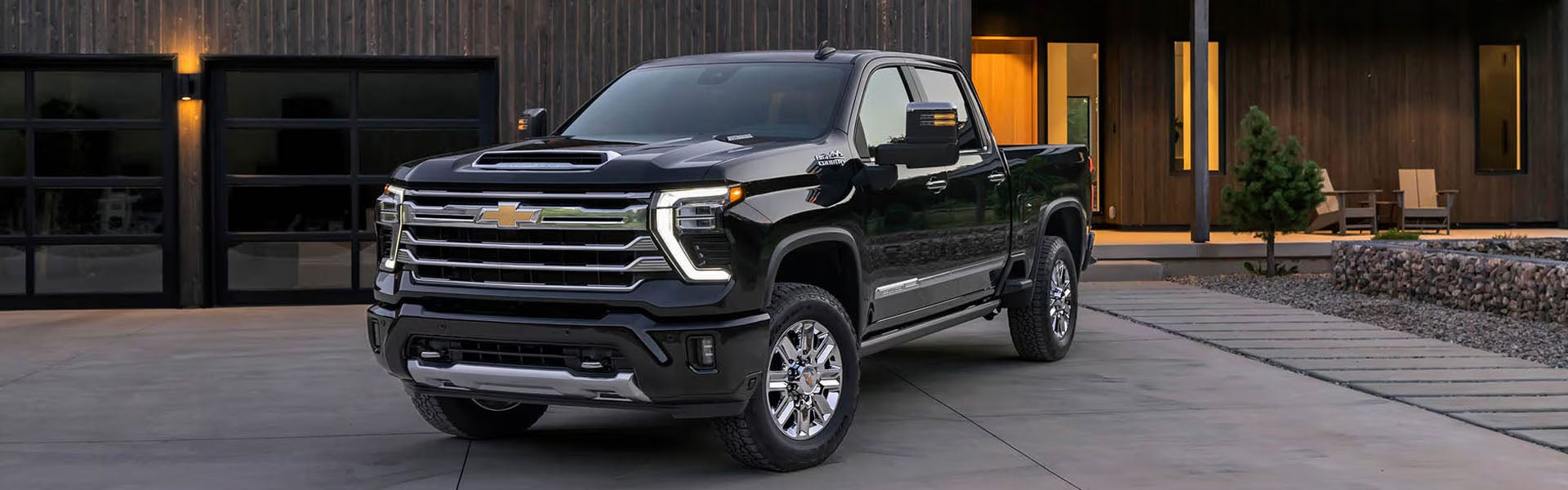
Pin weight is the number that bites
Conventional bumper-pull tongue weight runs roughly 10 to 15 percent of the loaded trailer. A gooseneck or fifth-wheel typically runs meaningfully higher, and all of it sits on the truck rather than behind it. That is the whole reason the HD exists, and it is why the payload figure matters more than the tow figure once you go gooseneck.
Concretely: a gas Crew Cab 2500HD carries a confirmed 3,426 lbs of payload, and the platform is rated to a GVWR of up to 11,900 lbs. Your pin weight comes out of that allowance first. Then the four of you in the cab, the tack, the feed, the water and whatever else rides in the bed come out of what is left. A stock trailer that looks well inside a 22,050-lb tow rating can still put you close on payload once it is genuinely loaded.
So read the payload sticker in the door jamb of the specific truck, not the brochure. Every build has its own number, and cab, bed and engine choice all move it. Our 2026 Silverado HD overview lays out the trim and cab combinations, and the Silverado HD FAQ answers the towing and payload questions we field most.
Duramax or the gas 6.6L
Two engines, and the split is cleaner on an HD than on a half-ton.
- 6.6L Duramax turbo-diesel V8, 470 hp and 975 lb-ft, Allison 10-speed automatic. Up to 22,050 lbs gooseneck or fifth-wheel and 20,000 lbs conventional, both with the Max Trailering Package. Available on every trim. That torque figure is the reason a loaded gooseneck feels unbothered on a grade, and the Duramax carries a longer powertrain warranty at 5 years or 100,000 miles.
- 6.6L gas V8, 401 hp and 464 lb-ft, 10-speed automatic. Up to 16,000 lbs conventional with 18, 20 or 22-inch wheels. It is the value play, it costs less to service, and for a two-horse or small stock trailer that goes out most weekends rather than every day, it is genuinely enough truck.
One ordering note worth more than it sounds: the integrated trailer brake controller is standard on every 2026 trim, so you are not shopping trims to get it. How it behaves and why a factory unit beats an aftermarket one is covered on our Silverado HD trailer brake controller guide.
What hauling stock around here actually asks
The run into Expo Square for a show or a sale is the honest test of a stock trailer rig, and it is not a horsepower test. It is stop-and-go on arrival, a long uphill pull off the fairgrounds approach, and a lot of low-speed maneuvering in gravel and mud with live weight shifting behind you. That is where the Allison’s low-speed calibration and the factory brake controller earn their money.
The other reality is heat and distance. A haul down toward Okmulgee or out through Coweta in an Oklahoma summer puts sustained load on cooling and transmission temperatures, and live animals in the trailer mean you cannot simply pull over and wait it out. Trucks that tow in this climate need their service intervals kept honestly, because fluids and filters age faster under load. The schedule and warranty terms are on our Silverado HD service schedule, and you can schedule service with our Chevrolet-certified technicians.
Bed length is the last practical piece. The standard bed measures 82.25 inches and the long bed 98.27 inches, and the long bed is what unlocks the 22,050-lb gooseneck rating. If a gooseneck is the plan, order the long bed.
See the 2500HD inventory we have on the ground and we will pull the payload sticker on any of them before you commit.
So which 2500HD should you order?
For most people hauling stock, it is a Duramax LT Crew Cab long bed. Match the truck to the trailer:
- If you run a loaded gooseneck regularly, Duramax plus Max Trailering plus the long bed. That is the 22,050-lb combination, and nothing else in the lineup reaches it.
- If your trailer is lighter and goes out on weekends, the gas 6.6L at 16,000 lbs conventional does the work and leaves money in your pocket. The WT starts at $45,900 before destination and is the most accessible way into the HD lineup.
- If the truck is also the family vehicle, step to LT or LTZ for the 13.4-inch screen and the interior you will actually want on a four-hour haul.
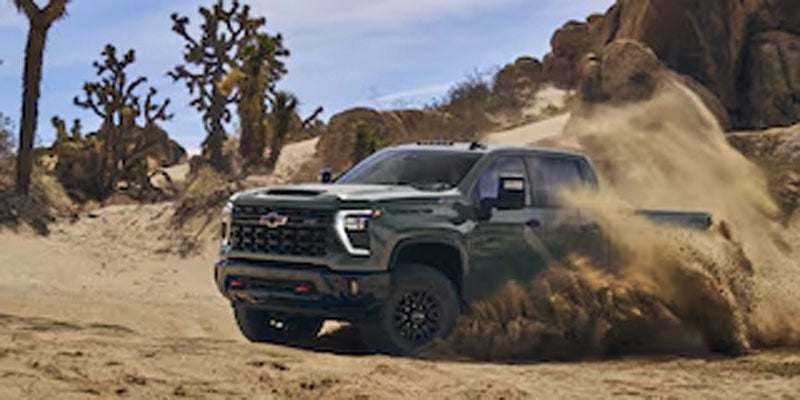
- If you run unimproved ground and pasture roads, the ZR2 brings the off-road hardware without giving up HD capability.
Cross-shopping the Super Duty is fair and we would rather you do it with real numbers, so we put them side by side on our Silverado HD vs Ford Super Duty comparison. And if it turns out your trailer never really needed an HD, our Silverado 1500 research hub covers the half-ton side.
Frequently asked questions
How much can a 2026 Silverado 2500HD pull on a gooseneck?
Up to 22,050 lbs gooseneck or fifth-wheel with the 6.6L Duramax and the Max Trailering Package, in Regular Cab or Crew Cab long-bed form.
What warranty does the Silverado 2500HD carry?
Three years or 36,000 miles bumper-to-bumper, five years or 60,000 miles on the gas powertrain, and five years or 100,000 miles on the Duramax diesel powertrain. Rust-through cover runs six years or 100,000 miles, and roadside assistance five years or 60,000 miles.
How much payload does a 2500HD have?
A gas Crew Cab carries a confirmed 3,426 lbs, on a platform rated to a GVWR of up to 11,900 lbs. Gooseneck pin weight, passengers and cargo all come out of that figure, so read the door-jamb sticker on the specific truck.
Do I need the diesel?
If you pull a loaded gooseneck regularly or cover long distances, yes: 975 lb-ft, the Allison 10-speed, the 22,050-lb rating and a 5-year/100,000-mile powertrain warranty. For lighter trailers and lower annual miles, the 401-hp gas V8 is the better value.
Does the 2500HD come with a trailer brake controller?
Yes. An integrated trailer brake controller is standard on every 2026 trim, not an option package.
Come price one out on Memorial Drive
Bring us your trailer, loaded weight and pin weight, and we will match it to a cab, bed and engine and confirm the payload on the actual truck before anything gets signed. We are at 4924 S Memorial Dr in Tulsa.
Browse the new Silverado 2500HD inventory, schedule a test drive, or call 918-921-4885. To keep the visit short, value your trade and get pre-approved first. Our contact page reaches the team directly.
Starting MSRP excludes destination freight charge, tax, title, license, dealer fees and optional equipment. Trailering and payload figures are maximums for a properly equipped truck in the configuration noted; the weight of passengers, cargo and accessories reduces what you can tow. Confirm current pricing, warranty terms and ratings with our team. Jim Norton T-Town Chevrolet stocks the Silverado 2500HD; the research hub covers the Silverado HD range.
What $21,700 Actually Buys You in a Chevy Trax
Quick answer
- The Trax LS starts at $21,700, which makes it the most accessible way into a brand-new Chevrolet.
- Every Trax runs the same 1.2L turbocharged three-cylinder, 137 hp and 162 lb-ft, with a six-speed automatic, and returns 28 city / 32 highway / 30 combined mpg.
- The whole range is front-wheel drive — all-wheel drive is not offered on the Trax. If you want AWD in a small Chevy SUV, that is the Trailblazer.
- It is genuinely roomy for the money: 25.6 cu ft behind the second row, 54.1 cu ft with it folded, and seating for five.
- Five trims: LS $21,700, 1RS and LT $23,200, 2RS and ACTIV $25,400. Heated front seats are standard from 1RS up.
The Trax LS starts at $21,700, and for that you get a genuinely new five-seat SUV with a turbocharged engine, 30 mpg combined and a factory warranty — not a stripped-out loss leader. The single most useful thing to know before you shop it is that every Trax is front-wheel drive, because that one fact decides whether the Trax or the Trailblazer is your car.
We get a lot of first-time new-car buyers and a lot of people replacing something tired, and the Trax answers both better than its price suggests. Here is what each rung actually buys. The full detail sits on our Chevrolet Trax research hub.
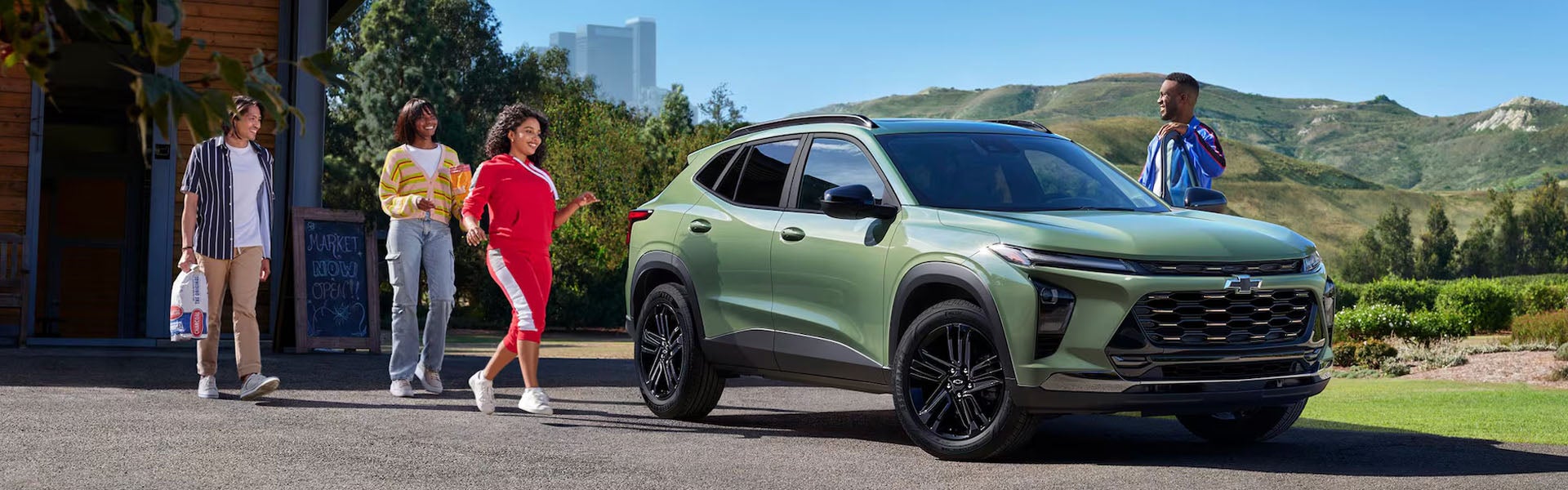
One engine, one drivetrain, no guesswork
Every 2026 Trax uses the same 1.2L turbocharged three-cylinder making 137 hp and 162 lb-ft through a six-speed automatic. There is no engine upgrade to weigh and no performance difference between a base LS and a loaded ACTIV.
Fuel economy is where that small engine pays you back: 28 city / 32 highway / 30 combined. Ratings for every configuration are at fueleconomy.gov. On a daily loop down Riverside Drive and across I-244, 30 combined is the kind of number you actually notice at the pump, and it is a large part of why this car makes sense as a commuter.
The drivetrain point is worth repeating because it is the one thing people assume wrongly: the Trax is front-wheel drive only. Front-wheel drive with decent tires handles Tulsa winters perfectly well, and most people here never need more. But if all-wheel drive is genuinely on your list, the right answer in this showroom is the Trailblazer, which offers it. Better to know now than after you have signed.
It is bigger inside than the price implies
The Trax holds 25.6 cubic feet behind the second row and 54.1 cubic feet with it folded, and seats five. At 178.6 inches long it still parks easily on Cherry Street or in the tight lots around Brookside, and a Brookside dinner run stops being a parking problem.
For context, that cargo figure is competitive with vehicles costing several thousand more. It is a real week of groceries, a dorm move, or a couple of bikes with the seats down. The full dimensional and trim breakdown is on our 2026 Trax overview, and the Trax FAQ covers what buyers ask most.
What each rung buys
The ladder is short and the steps are clear, which makes this an unusually easy car to shop:
- LS, $21,700 before destination. The entry point, with the 8-inch touchscreen and the full standard safety suite.
- 1RS and LT, $23,200 before destination. The value sweet spot. Both add heated front seats as standard, which on an Oklahoma January morning is worth more than the price difference. 1RS is the sportier look; LT leans comfort.
- 2RS, $25,400 before destination. The sport-styled trim at the top of the range.
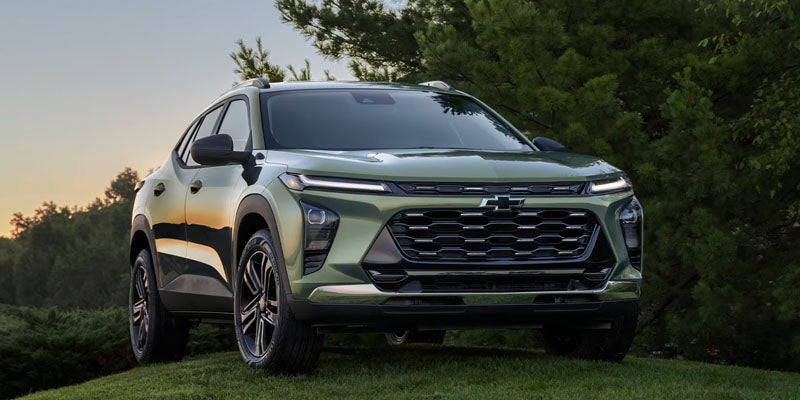
- ACTIV, $25,400 before destination. Same price, with the rugged-look treatment and the most equipment in the range.
Wireless Apple CarPlay and Android Auto are part of the story across the range, and our Trax wireless CarPlay and Android Auto guide explains how it works and what you get on each trim.
Rather than quote you a payment on a web page, we would rather you run your own numbers: our payment calculator lets you put in your own down payment and term, and getting pre-approved takes a few minutes and makes the showroom conversation a real one.
See the Trax inventory we have on the ground — trims move quickly at this price.
So which Trax should you buy?
For most buyers it is the LT. Route it off what you actually care about:
- If the priority is the lowest price on a new vehicle, the LS at $21,700, and you are not giving up the engine, the mileage or the warranty to get there.
- If you want the one upgrade that matters daily, step to the LT or 1RS for standard heated front seats.
- If you want it loaded, ACTIV for the outdoorsy treatment, or 2RS for the sport look.
- If all-wheel drive is non-negotiable, the Trailblazer is the small Chevy SUV that offers it, and we stock those too.
If you are cross-shopping, we put the two side by side on our Trax vs Hyundai Kona comparison. And because running cost is much of the appeal here, the service intervals and warranty terms are laid out on our Trax maintenance and ownership guide, with our team ready to schedule service when you are due.
Frequently asked questions
How much is a 2026 Chevy Trax?
The LS starts at $21,700. The 1RS and LT are $23,200, and the 2RS and ACTIV are $25,400, all before destination and fees.
Does the Chevy Trax come in all-wheel drive?
No. Every Trax is front-wheel drive. If you want all-wheel drive in a small Chevrolet SUV, the Trailblazer offers it.
What gas mileage does the Trax get?
28 city / 32 highway / 30 combined mpg, from the 1.2L turbocharged three-cylinder that every trim shares.
How much cargo space does a Trax have?
25.6 cubic feet behind the second row and 54.1 cubic feet with the second row folded, with seating for five.
Which Trax trim is the best value?
The LT or 1RS at $23,200. Both add standard heated front seats over the LS, which is the upgrade owners notice most, and neither changes the engine or the fuel economy.
Come drive one on Memorial Drive
The Trax is a car that makes more sense in person than on a spec sheet, because the space surprises people. Ten minutes settles it. We are at 4924 S Memorial Dr in Tulsa.
Browse the new Trax inventory, schedule a test drive, or call 918-921-4885. To keep the visit short, value your trade first. Our contact page reaches the team directly.
Starting MSRP excludes destination freight charge, tax, title, license, dealer fees and optional equipment. EPA estimates; your mileage will vary. Confirm current pricing and availability with our team.
Owning a Corvette Grand Sport Year-Round in Tulsa
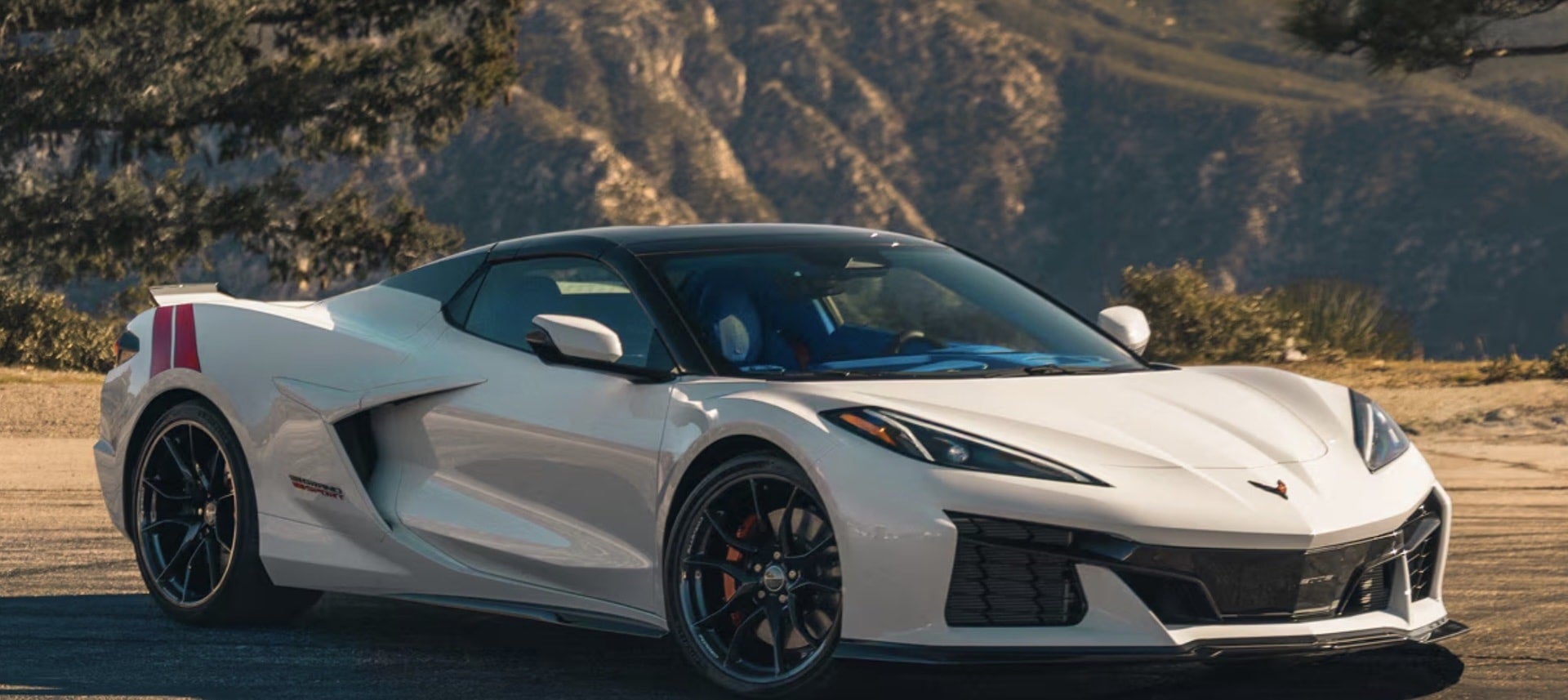
A 2027 Corvette Grand Sport works as a year-round car in Tulsa if you plan for three things: a garage bay wide enough for a 79.7-inch body, a battery maintainer for the weeks it sits, and a tyre choice that suits road driving rather than track days. None of those is expensive, and none of them is a surprise once you know to ask.
What follows is the practical side of Corvette ownership here, from a store that sells and services them on South Memorial Drive. We have Grand Sports on the ground now, and Corvette allocation is limited enough that the honest advice is to have this conversation before you fall for a specific car.
- The 2027 Corvette Grand Sport is 79.7 inches wide excluding mirrors and 48.6 inches tall.
- It makes 535 horsepower and 520 lb-ft from a naturally aspirated 6.7L LS6 V8.
- Oil changes follow the GM Oil Life System, with a minimum of one change a year.
- The all-wheel-drive Grand Sport X widens the usable window, arriving fall 2026.
- Pricing starts at $86,000 before the $2,495 destination charge.
First, will it fit where you park it?
This is the question nobody asks until the car is on the truck. The Grand Sport uses the wide body that used to be reserved for the Z06, which puts it at 79.7 inches across without mirrors. That is wider than most full-size pickups through the body, and it changes how you think about a standard nine-foot garage bay.
The bay itself is usually fine. What catches people out is what is stacked along the walls, and whether both doors can open far enough to get out without a scrape. At 48.6 inches tall it also sits low enough that a steep driveway apron wants approaching at an angle. If your driveway drops sharply off the street, the front-axle lift is the option worth having. Every published dimension is on the specifications page if you want to measure before you commit.
The Oklahoma weather question, answered honestly
Tulsa gives you a long usable season. Spring and autumn are close to ideal, summer is fine if the car has ventilated seats, and the genuinely difficult stretch is a handful of weeks around the ice storms rather than a whole winter. The realistic picture is a car you drive most of the year and park for a few weeks.
If you want that window wider, the all-wheel-drive Grand Sport X is the answer, and it is a real one rather than a marketing one. It adds an electric motor on the front axle, comes on all-season tyres as standard, and takes combined output to 721 horsepower. The two are set side by side on the Grand Sport versus Grand Sport X comparison. If you would rather have the lighter rear-drive car and simply pick your days, that is a perfectly good plan too, and it is what most Corvette owners here actually do.
What it costs to keep, and what actually drives that
Scheduled maintenance on a naturally aspirated V8 is straightforward. The car runs the GM Oil Life System, so the interval comes from how you drive rather than from a fixed mileage, and the one hard rule is an oil change at least once a year with a reset even if the mileage is low. That last part matters here, because a Corvette that comes out on clear weekends covers fewer miles than the owner expects.
The variable that actually moves your running cost is tyres, and you choose it at the order sheet rather than at the service desk. The Z52 Track Performance Package brings Cup 2 R tyres built for grip; the Z52 Sport package’s high-performance tyres last longer on the road. Equipment level makes no difference at all, because 1LT, 2LT and 3LT share the same engine, transaxle and standard brakes. The service page goes through the whole picture, and you can book a visit whenever the car needs one.
Which one to order for the way you will actually use it
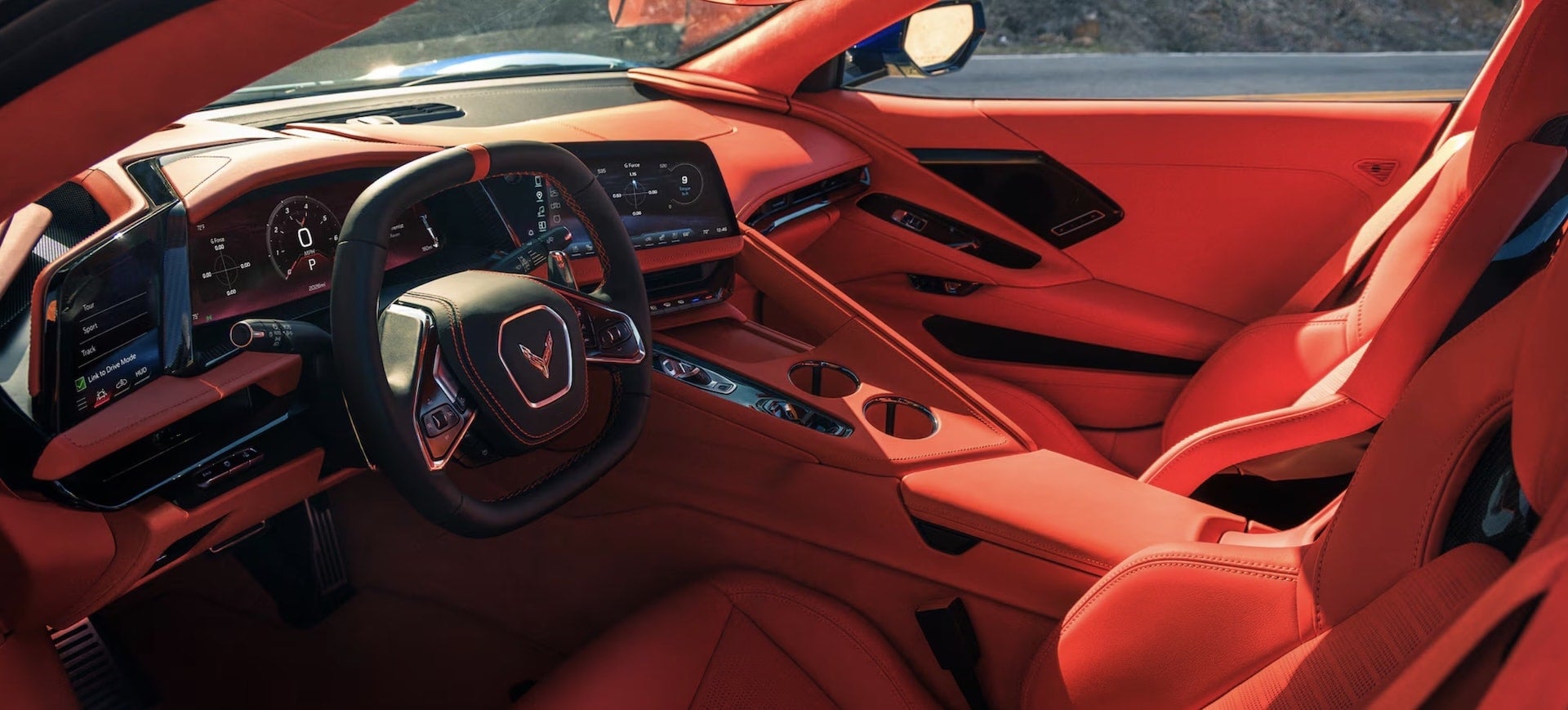
If the car is a weekend car that lives in the garage, the 1LT at $86,000 is a complete Corvette. Same 535-horsepower LS6, same wide body, same suspension, and it takes either performance package, so it can be the quickest Grand Sport on the lot.
If you are going to drive it into town on weeknights, the 2LT is the one. Heated and ventilated seats matter through an Oklahoma August, and the blind zone and cross traffic alerts do real work reversing a wide, low car out of a parking structure. If the cabin is what you care about, the 3LT adds the GT2 Napa leather seats and 14 interior colour combinations. All three ladders, and what each step costs, are on the trims page, and the display and audio differences are covered under interior and technology.
See every Corvette Grand Sport in stock
Buying one here
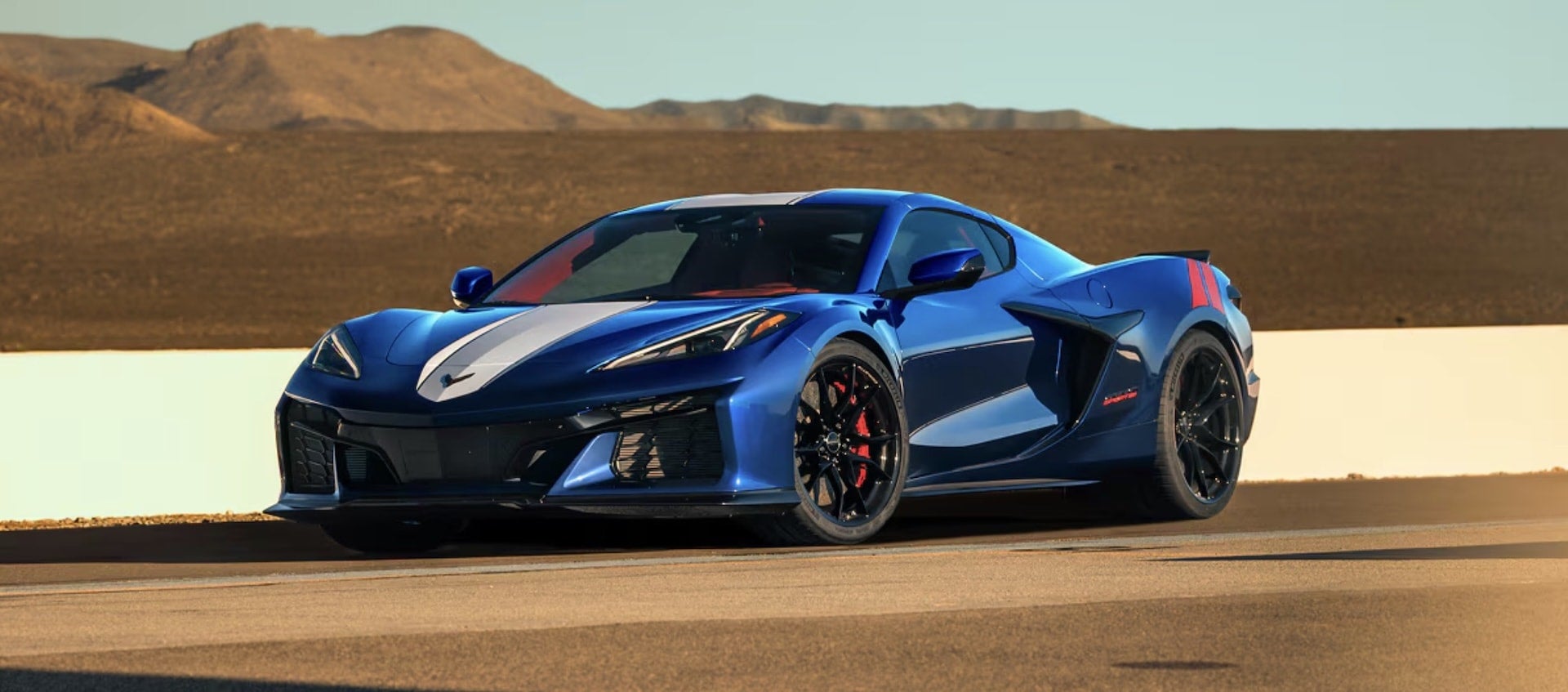
We are at 4924 S Memorial Dr, straight off the Broken Arrow Expressway, and the Creek Turnpike puts us inside a short drive for buyers coming from Broken Arrow or Sand Springs. Corvette allocation is not spread evenly between stores, so the specific colour, stripe and seat combination you want is usually an order rather than something you find on a lot. That is the single practical reason to start early.
The sensible sequence on an allocation-limited car is to get pre-approved first, get a number on your trade, and then talk specification. The full picture of the car is on the Grand Sport overview, and anything still open is probably answered on the questions page or across the rest of the Corvette Grand Sport research hub.
Common questions
Can a Corvette Grand Sport be a daily driver?
For most of the Tulsa year, yes. Two seats and 9.1 cubic feet of luggage room set the limits, and a 2LT with heated and ventilated seats makes the summer and the cold snaps comfortable. Buyers who want the widest possible window take the all-wheel-drive Grand Sport X.
Does it need premium care over winter?
A battery maintainer is the one thing worth buying, because the usual pattern here is a car that sits between weekends. Keep the annual oil change even if mileage is low, and check tyre pressures after a cold snap. The service page covers the rest of the schedule.
Will a Grand Sport fit in a standard garage?
A standard nine-foot bay works for a 79.7-inch-wide car, but door swing and whatever is stored along the walls are the real constraints. Measure before you order, and consider the front-axle lift if your driveway apron is steep. Full dimensions are on the specifications page.
Which equipment level do most buyers choose?
The 2LT, because everything it adds is equipment you use on an ordinary drive: the bigger Bose system, heated and ventilated seats, the head-up display and the parking aids. The 1LT is the choice for a garage-kept weekend car, and the trims page sets the three side by side.
How soon should I order for a specific build?
As early as you can. Allocation is limited, and colour, stripe, hash and seat combinations are all decided at order. Book a drive and we will start the conversation from what you actually want, or read the rest of the Corvette Grand Sport research hub.
Published by Jim Norton T-Town Chevrolet, 4924 S Memorial Dr, Tulsa, OK 74145. Prices are manufacturer’s suggested retail and exclude tax, title, licence and dealer fees.
Buy the 2026 Equinox Now or Plan for the 2027?
Quick answer
- The 2026 Equinox is on the ground now, in three trims: LT from $28,800, with RS and ACTIV both at $33,600 in front-wheel drive.
- Every trim runs the same 1.5L turbocharged four-cylinder, 175 hp, making 184 lb-ft in front-wheel drive and 203 lb-ft with all-wheel drive.
- Front-wheel-drive models are EPA-rated at 26 city / 29 highway / 27 combined mpg.
- All-wheel drive is available on every trim and brings an eight-speed automatic with it.
- If you would rather plan ahead, the 2027 Equinox has its own research page — but nothing about the 2026 is a placeholder.
If you need a compact SUV in the next few months, buy the 2026 Equinox: it is here, it is fully current, and at $28,800 for the LT it is the version you can actually drive home this week. If your replacement is a year out, it is worth reading up on the 2027 before you commit either way — but that is a planning question, not a reason to wait on a car you need now.
We get asked this every autumn, on every nameplate, and the honest answer is almost always the same: model-year timing matters far less than whether the vehicle in front of you fits. Here is what the 2026 actually is, so you can judge that for yourself. Our Chevrolet Equinox research hub has every page we have written on it.
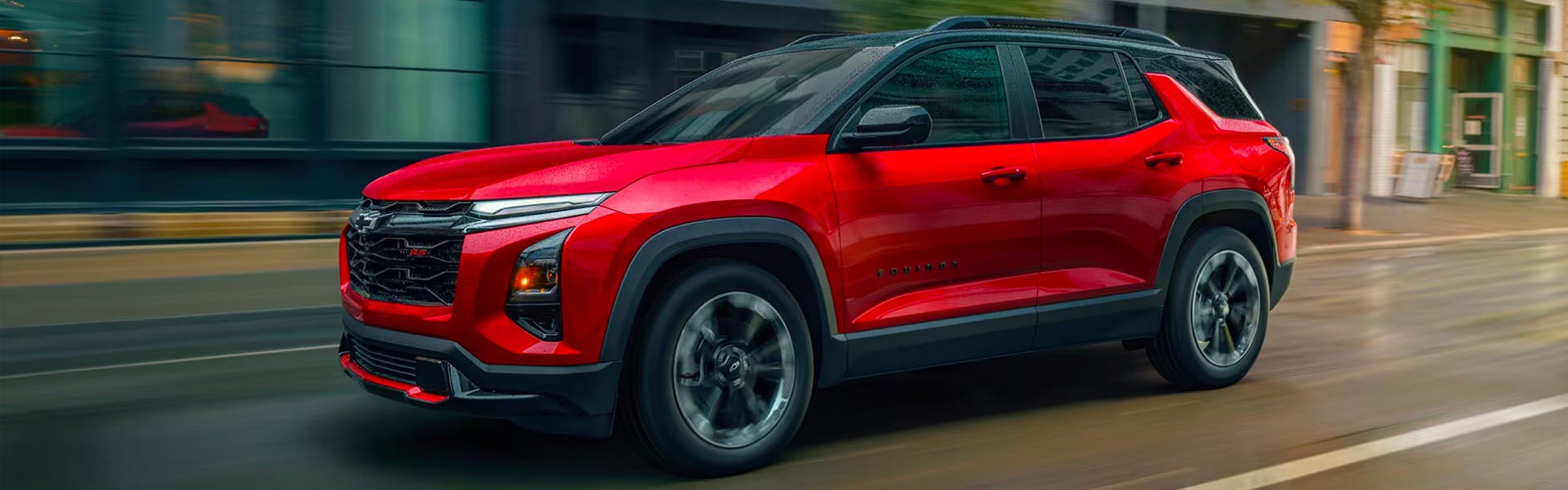
What the 2026 Equinox actually is
Three trims, one engine, and a genuinely simple decision tree. The 1.5L turbocharged four-cylinder makes 175 hp across the board. The torque figure changes with drivetrain: 184 lb-ft in front-wheel drive, 203 lb-ft with all-wheel drive, which pairs with an eight-speed automatic.
Fuel economy in front-wheel drive is 26 city / 29 highway / 27 combined. Ratings for every configuration are at fueleconomy.gov. That is a comfortable number for a commute out to Sapulpa and back, or the longer run up toward Bartlesville on a weekend.
The trim ladder:
- LT, from $28,800 before destination. The volume trim and the most accessible way into the lineup.
- RS, $33,600 before destination. The sport-styled version, with the blacked-out treatment.
- ACTIV, $33,600 before destination. Same price as the RS, with the rugged-look treatment instead. Pick on taste, not capability.
All-wheel drive is available on every trim, which is worth knowing if your winter includes the ramps along OK-66 or a commute that starts before the roads through Creek County get treated. The full breakdown is on our 2026 Equinox overview, and the Equinox FAQ covers what buyers ask most.
The technology is current, not a stopgap
The thing that usually drives “should I wait” thinking is a fear that this year’s car is about to look dated. On the Equinox that is not the situation: the safety and driver-assistance content on the 2026 is the current Chevrolet suite, not a carryover. Our Equinox technology and safety guide walks through exactly what is standard and what is available, which is the fastest way to judge whether anything you care about is missing.
When waiting genuinely makes sense
Two situations make planning around the 2027 the right call, and neither is about the 2026 being deficient.
The first is a lease or a finance term that runs out next year anyway. If your current vehicle is fine until then, there is no reason to move early, and you may as well read up. The second is if a specific feature or configuration matters enough that you would rather have it than have a car sooner. That is a legitimate trade, and our 2027 Chevrolet Equinox page is where to check it.
What does not make sense is waiting on a vehicle you need now, in a segment where the current car is strong, on the general principle that newer is better. The 2026 has a full factory warranty starting the day you take it, and the intervals and ownership costs are laid out on our Equinox maintenance and ownership guide — with our team ready to schedule service when you are due.
See the 2026 Equinox inventory we have right now, and we will tell you honestly if what you want is worth waiting for.
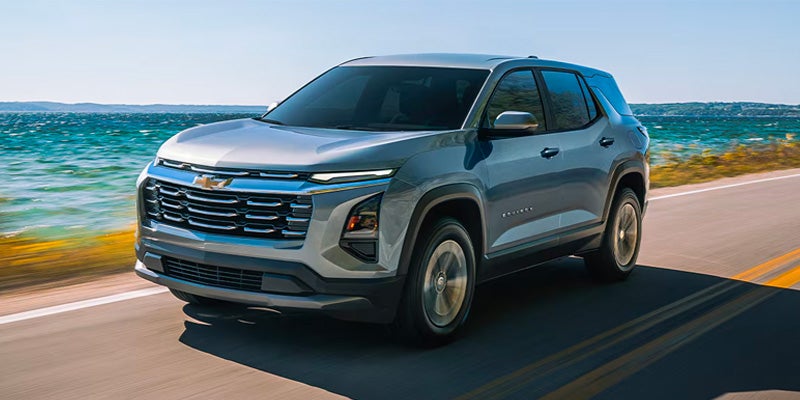
So what should you do?
- If you need a vehicle in the next few months, the 2026 LT at $28,800 is the answer, and all-wheel drive is a straightforward add on any trim.
- If you want the sport look, the RS at $33,600; if you want the rugged look, the ACTIV at the same price.
- If your current vehicle comfortably lasts another year, read the 2027 page, then come talk to us closer to the time.
- If you are cross-shopping the segment, we put the two leaders side by side on our Equinox vs Honda CR-V comparison.
Frequently asked questions
How much is a 2026 Chevy Equinox?
From $28,800 for the LT in front-wheel drive. The RS and ACTIV are both $33,600, before destination and fees.
What engine is in the 2026 Equinox?
A 1.5L turbocharged four-cylinder making 175 hp, on every trim. It makes 184 lb-ft in front-wheel drive and 203 lb-ft with all-wheel drive.
What does an Equinox cost to run?
Front-wheel-drive models are EPA-rated at 26 city / 29 highway / 27 combined mpg. Oil changes are scheduled by the GM Oil Life System rather than a fixed mileage, and the warranty runs 3 years/36,000 miles basic with 5 years/60,000 miles powertrain.
Can you get an Equinox with all-wheel drive?
Yes, all-wheel drive is available on every trim and pairs with an eight-speed automatic.
Should I wait for the 2027 Equinox?
Only if your current vehicle comfortably lasts that long or a specific configuration matters more to you than having a car sooner. The 2026 is a fully current vehicle with a full factory warranty, available now.
Come see one on Memorial Drive
Bring us your timeline and we will give you a straight answer about whether to move now or plan for later. We are at 4924 S Memorial Dr in Tulsa.
Browse the new Equinox inventory, schedule a test drive, or call 918-921-4885. To keep the visit short, value your trade and get pre-approved first. Our contact page reaches the team directly.
Starting MSRP excludes destination freight charge, tax, title, license, dealer fees and optional equipment. EPA estimates; your mileage will vary. Model-year availability and specifications are subject to change; confirm current pricing and configuration with our team.
Quick answer
- Most contractors buy a Crew Cab, so start there. In Crew Cab form the 3.0L Duramax Turbo-Diesel is rated for conventional trailering up to 13,200 lbs (Short Bed 2WD). The 6.2L V8 matches it at 13,200 lbs as a Crew Cab 4×4.
- The often-quoted 13,300-lb lineup maximum belongs to a Duramax Double Cab Standard Bed 2WD — a lighter, lower-volume truck than most people order. Worth knowing before you shop on that number.
- The 5.3L EcoTec3 V8 tops out at 11,400 lbs and the 2.7L TurboMax at 9,500 lbs, each on its own lightest configuration. Crew Cab ratings run lower, so confirm the figure for the truck you are actually buying.
- Max available payload is 2,260 lbs, and your trailer’s tongue weight comes out of that number before any tools or passengers do.
- Every top rating needs the available Max Trailering Package, and the 13,200 and 13,300-lb figures also need 20-inch wheels. Silverado 1500 pricing starts at $36,900 before destination.
If you are pulling a loaded work trailer around Tulsa and you want a Crew Cab, the 3.0L Duramax Turbo-Diesel is rated for conventional trailering up to 13,200 lbs and returns 28 MPG on the highway. The 5.3L EcoTec3 V8 is the engine that fits the widest range of jobs and costs less to buy, topping out at 11,400 lbs. Both need the available Max Trailering Package to reach those figures.
That is the part most towing guides get to and then stop. The half they skip is payload, and it is the number that quietly sends contractors back a year later wishing they had spent twenty more minutes on the spec sheet. Here is how we actually walk through it on the lot at Jim Norton T-Town Chevrolet. If you want the whole library in one place first, our Chevrolet Silverado 1500 research hub collects every page we have on this truck.
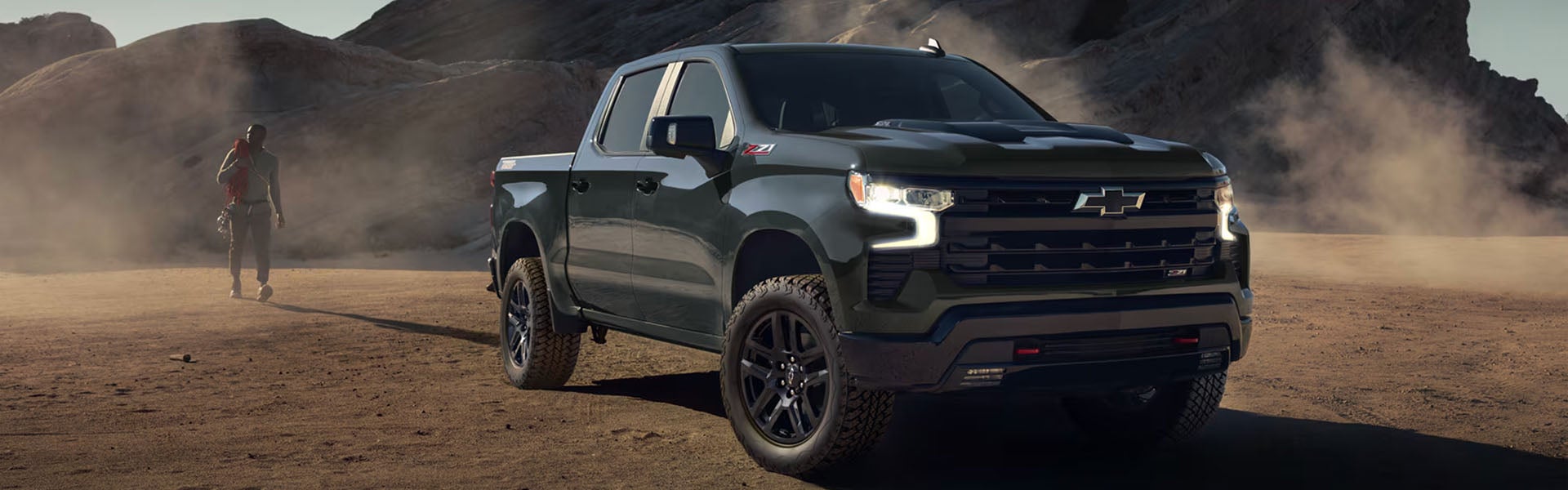
Start with payload, not the tow rating
A conventional bumper-pull trailer puts roughly 10 to 15 percent of its loaded weight straight down on the hitch. That is tongue weight, and it does not count against your tow rating. It comes out of your payload, the same allowance carrying you, your crew, the toolboxes and whatever is in the bed.
Run that percentage against your own trailer and the point lands quickly. Silverado 1500 max available conventional payload is 2,260 lbs, measured on a Regular Cab Long Bed 2WD with the TurboMax engine. Tongue weight comes off that allowance first, and everything else comes off what is left. A truck sitting comfortably inside its tow rating can still be working hard on payload, and Chevrolet says as much in its trailering guidance: the weight of passengers, cargo and accessories reduces what you can tow.
The fix usually costs nothing. Order the cab and bed that match the work instead of defaulting to the biggest crew cab on the lot, and read the payload sticker in the door jamb of the truck you are actually buying, because that figure is specific to how it was built. Our 2026 Silverado 1500 overview lays out how the trims, cabs and three bed lengths combine, and the Silverado 1500 FAQ answers the towing and payload questions we field most at the desk.
The four engines, sorted by what you are pulling
Each engine owns a clear lane. Every figure below is a conventional-trailering maximum for a properly equipped truck, with the achieving configuration named once beside it, and all four need the available Max Trailering Package to get there. The 13,200 and 13,300-lb ratings also need 20-inch wheels, which is far cheaper to order than to add later. Read these as ceilings: a Crew Cab of the same truck is rated lower, and the window sticker on the one you buy is the number that counts.
- 2.7L TurboMax, 310 hp and 430 lb.-ft., conventional towing up to 9,500 lbs as a Regular Cab Long Bed 2WD. Standard on WT, Custom, Custom Trail Boss, LT, RST and LT Trail Boss, it carries Chevrolet’s best-in-class standard torque figure and is the most accessible way into the lineup. Strong for skid-steer trailers, dump trailers and enclosed job boxes in the 6,000 to 8,000-lb range.
- 5.3L EcoTec3 V8, 355 hp and 383 lb.-ft., conventional towing up to 11,400 lbs as a Double Cab Standard Bed 2WD. Standard on LTZ and High Country and available on WT, Custom Trail Boss, LT, RST and LT Trail Boss, this is the all-rounder we hand the keys to most often for mixed-duty work. Worth knowing: a lot of sites publish 11,300 for this engine. Chevrolet’s own 2026 trailering chart says 11,400.
- 6.2L EcoTec3 V8, 420 hp and 460 lb.-ft., conventional towing up to 13,200 lbs as a Crew Cab 4×4. The most powerful gas engine, and the pick when you want maximum grunt without diesel. Available on LT Trail Boss and ZR2, and on RST, LTZ and High Country in four-wheel drive.
- 3.0L Duramax Turbo-Diesel, 305 hp and 495 lb.-ft., conventional towing up to 13,300 lbs as a Double Cab Standard Bed 2WD. Available on Custom Trail Boss, LT, RST, LT Trail Boss, LTZ and High Country and standard on ZR2, it is the only diesel in the half-ton class, it reaches the lineup’s outright conventional maximum, and EPA rates it at 23 city, 28 highway and 25 combined in 2WD form. Ratings by configuration are at fueleconomy.gov.
What towing here actually asks of a truck
Green Country has no mountain passes, and people new to towing read that as easy duty. It is not, and the reason is heat. We are in the stretch of the year where afternoons sit at or above 100 degrees, and a loaded trailer on a 100-degree afternoon is the hardest thing most work trucks do all year. Transmission and coolant temperatures climb, tire pressures rise on hot asphalt, and stop-and-go traffic gives none of the airflow highway running does.
So the hardware matters more than the horsepower here. The integrated trailer brake controller is built into the dash rather than bolted under it, so trailer braking is tuned with the truck instead of added to it. Tow/Haul mode shifts to keep the transmission out of the temperature range that shortens its life. And the camera system available on LT and above, up to eight cameras and fourteen views, turns hitching a tall equipment trailer alone into a two-minute job.
The routes back that up. The Broken Arrow Expressway at 4 p.m. with a loaded tandem behind you is a brake-and-cooling test, not a power test. The grade on US-75 south toward Glenpool is short but real, and it is the first place a mismatched truck and trailer tells on itself. Hauling west through Sand Springs, out to Catoosa, or up into the Osage County lease roads adds surface changes that make trailer sway control worth having. Heat is also why we push the service schedule on trucks that tow, because fluids and filters age faster under load in this climate. The full interval list and warranty terms are on our Silverado 1500 maintenance guide, and you can schedule service with our Chevrolet-certified technicians whenever you are due.
Ready to put numbers to it? See every new Silverado 1500 in stock and we will pull the payload sticker on any truck on the lot before you commit to it.
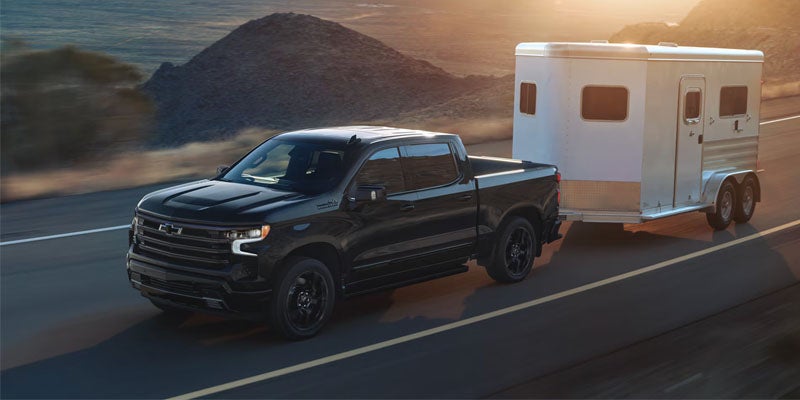
The jobsite details that pay off after you park
Towing is the headline, but a work truck earns the rest of its money standing still. On every Silverado 1500, the Durabed carries twelve standard tie-downs rated at 500 lbs per corner and a wheel-well width of 50.6 inches, so a sheet of plywood lies flat. Bed volume runs 62.9 cubic feet on the short bed, 71.7 on the standard bed, and up to 89.1 cubic feet with the eight-foot long bed, which Chevrolet markets as best-in-class standard cargo volume.
The one option worth a specific look is the Multi-Flex Tailgate, standard on ZR2 and available on the upper trims. It folds into six configurations, including an inner panel that becomes a standing-height work surface and a step that makes bed access safe in work boots. If you cut or lay out material at the truck, it is the closest thing the lineup has to a free workbench. Our Multi-Flex Tailgate guide walks through all six positions and which trims carry it.
So which one should you order?
For most local contractors it is a 5.3L V8 on an LT or RST. Match the truck to the trailer and the miles, and the rest of the build follows:
- If your conventional trailer runs under 9,500 lbs and you want the strongest value, a WT or Custom with the 2.7L TurboMax does the job on 430 lb.-ft. of torque, starting at $36,900.
- If you pull mixed loads and want one truck that covers everything, the 5.3L V8 on an LT or RST is the pick we make most often, with the 13.4-inch screen standard on LT and above and the camera package available on top.
- If you tow heavy or you live on the highway, order the Duramax. It carries 495 lb.-ft. of torque and Chevrolet rates it up to 28 MPG highway, which is real money at contractor mileage.
- If you want maximum gas power or a truck that works all week and plays on weekends, the 6.2L V8, or a Trail Boss with its two-inch factory lift and Z71 package for lease roads and unimproved sites.
- If you also want the highway miles to be easy, High Country adds available Super Cruise hands-free driving that works while towing.
Cross-shopping first is smart, and we would rather you do it with real numbers, so we put the two best-selling half-tons side by side on our 2026 Silverado 1500 vs Ford F-150 comparison. If you run a fleet on a replacement cycle, our 2027 Silverado 1500 preview covers the redesign, the new engines and when it lands.
Frequently asked questions
How much can a 2026 Silverado 1500 tow?
In Crew Cab form, which is what most buyers order, the 3.0L Duramax Turbo-Diesel is rated up to 13,200 lbs of conventional trailering as a Short Bed 2WD. The 6.2L V8 reaches the same 13,200 lbs as a Crew Cab 4×4. The often-quoted 13,300-lb lineup maximum is a Duramax Double Cab Standard Bed 2WD, a lighter truck than most people buy. The 5.3L V8 tops out at 11,400 lbs and the 2.7L TurboMax at 9,500 lbs, each on its own lightest configuration. Every top figure needs the Max Trailering Package, and the 13,200 and 13,300-lb ratings also need 20-inch wheels.
How much payload does a Silverado 1500 have?
Max available payload is 2,260 lbs, on a Regular Cab Long Bed 2WD with the TurboMax engine. Conventional trailer tongue weight, passengers and cargo all come out of that figure, so check the payload sticker in the door jamb of the specific truck you are buying.
Which Silverado engine is best for towing a work trailer?
For most contractors, the 5.3L EcoTec3 V8 at up to 11,400 lbs conventional as a Double Cab Standard Bed 2WD. Choose the 3.0L Duramax if your trailer runs near the maximum or you cover long highway miles, and the 2.7L TurboMax if your trailer stays under 9,500 lbs.
How often does a hard-working Silverado 1500 need servicing?
The truck schedules oil changes through the GM Oil Life System rather than a fixed odometer figure, so a truck working hard in this climate calls for service sooner than one that never tows. Warranty runs 3 years/36,000 miles basic and 5 years/60,000 miles powertrain. The full interval list is on our Silverado 1500 maintenance guide.
Is a half-ton enough, or do I need a heavy duty?
If your loaded trailer stays inside the conventional rating you order to, a Silverado 1500 handles it and gives you a far better daily-driving truck. When your work regularly runs above 13,300 lbs or moves to a gooseneck, that is where a Silverado HD is the better fit, and we stock those too.
Come price one out on Memorial Drive
Bring us your trailer weight and your typical load. We will match it to a cab, bed and engine, pull the payload sticker on the actual truck, and make sure the Max Trailering Package is on the build sheet before you sign anything. We are at 4924 S Memorial Dr, an easy run in from Broken Arrow or up US-75.
Browse the new Silverado 1500 inventory, schedule a test drive with a trailer conversation attached, or call 918-921-4885. To make the visit quick, value your trade and get pre-approved first so the number we talk about is a real one. Our contact page reaches the team directly if you would rather start with a question.
Starting MSRP excludes destination freight charge, tax, title, license, dealer fees and optional equipment. Trailering and payload figures are maximums for a properly equipped truck in the configuration noted; the weight of passengers, cargo and accessories reduces what you can tow. All ratings are conventional trailering. Confirm current pricing, warranty terms and ratings with our team.
Buying Your First Work Truck in Tulsa
Quick answer
- If your trailer stays under 7,700 lbs properly equipped, a Colorado does the work and costs less to buy, park and run than a half-ton.
- Every Colorado runs the same 2.7L TurboMax turbo four, 310 hp and 430 lb-ft, so you are choosing hardware, not power.
- Pricing starts at $32,400 before destination, and every trim gets the 11.3-inch screen with Google built-in.
- Warranty is 3 years/36,000 miles basic and 5 years/60,000 miles powertrain, with 5 years/60,000 miles of roadside assistance.
- All five trims seat five, so the truck still works on a Sunday.
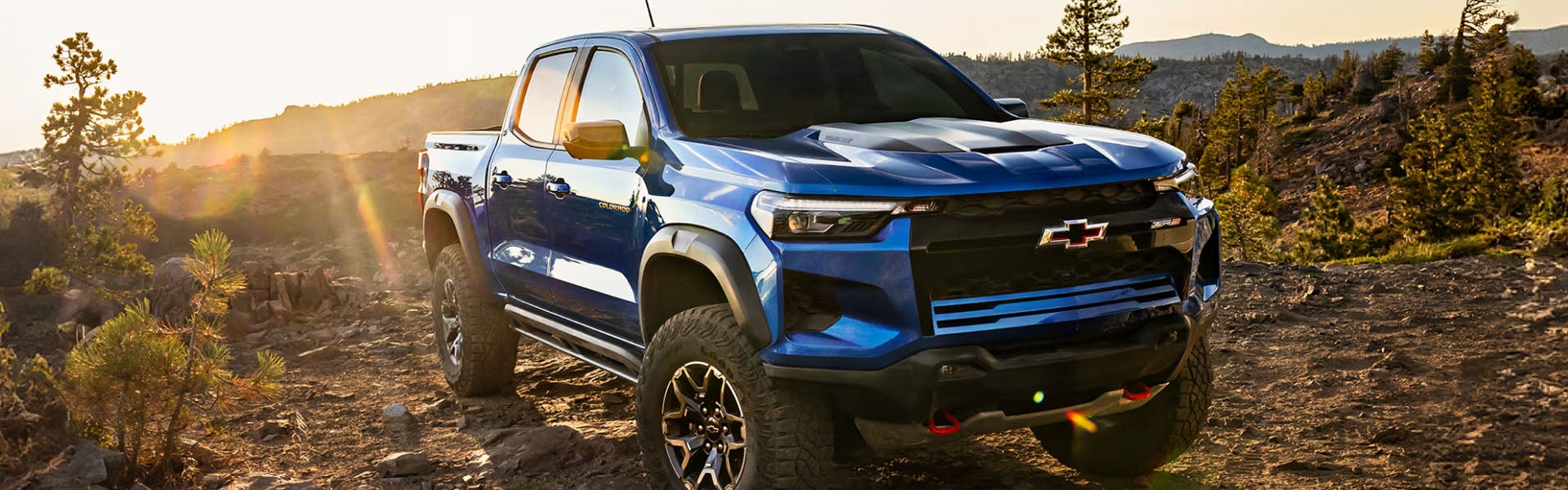
If this is your first truck and your trailer stays under 7,700 lbs properly equipped, buy a Colorado rather than a half-ton. It does the same work for most trades, costs less to get into at $32,400 before destination, and it fits easily in the places a full-size truck has to be planned around.
Most first-truck buyers start out looking at half-tons, because that is what the spec sheets put in front of you. Both are good trucks and we sell plenty of each; the only question worth answering is which one matches the trailer you actually pull. Here is how we work through it across the desk. Our Chevrolet Colorado research hub has every page we have written on the truck.
Start with the trailer, not the truck
Write down what you actually pull, loaded, on your heaviest day. That single number decides almost everything else. Properly equipped, the WT, LT, Trail Boss and Z71 are all rated to tow up to 7,700 lbs, which covers a single-axle dump trailer, a skid-steer on a light tandem, a mower trailer or an enclosed job box for most trades.
If your honest answer is comfortably under that, the Colorado is the right size for the job. If it is above it, a Silverado is the better fit and we will say so, and the Silverado 1500 research hub is where that conversation starts. Getting this right at the beginning is the whole game, and it is much cheaper than discovering it a year in. The full capability breakdown is on our Colorado engine and capabilities page.
One engine, so the trims are about hardware
Every 2026 Colorado, from the base WT to the ZR2 Bison, uses the same 2.7L TurboMax turbocharged four making 310 hp and 430 lb-ft of torque. There is no engine upgrade to save for and no performance penalty for buying the cheap one.
What changes as you go up is drivetrain and suspension. WT and LT are rear-wheel drive with four-wheel drive optional, and that system is single-speed. Trail Boss, Z71 and ZR2 come with four-wheel drive standard and a two-speed transfer case that adds low range. If your work stays on pavement and gravel, the single-speed system suits it. If you are on unimproved ground, pasture roads or a boat ramp, low range is what you want. The Colorado FAQ covers the configuration questions we field most.
What a first truck actually does around here
The reason a mid-size makes sense for a first truck in this market is that most of the week is not towing. It is a run out to a supply house on Admiral Boulevard, a job the far side of Sperry and a second one back through Sperry the same afternoon, a delivery out toward Inola or Chelsea, and then parking somewhere that was laid out before crew-cab half-tons existed.
A Colorado handles all of that easily, and it still seats five, so the same truck takes the family out on Saturday. That dual-use case is the single best argument for a mid-size as a first truck, and it is the thing spec comparisons never capture.
The one thing to plan for is upkeep. A truck that works gets dirty inside and out, and filters load up faster than they do on a commuter. The Colorado schedules oil by the GM Oil Life System rather than a fixed odometer number, so it tells you when it is genuinely due. The intervals and warranty detail are on our Colorado maintenance and ownership guide, and you can schedule service with our Chevrolet-certified technicians.
See the Colorados we have on the ground and we will match one to the trailer you described.

So which Colorado should a first-time buyer get?
For most people it is an LT. Route it off the work:
- If you want the most accessible way in, the WT at $32,400 before destination is a genuinely capable work truck and it tows the same 7,700 lbs.
- If it is also your daily driver, the LT adds the comfort and equipment you will notice every morning, and keeps the same engine and rating.
- If the job leaves pavement, Trail Boss brings standard four-wheel drive and the two-speed transfer case without ZR2 money.
- If you want the truck to do weekends properly, the Z71 or ZR2 add the off-road hardware, and every trim still seats five.
If you are cross-shopping the segment, we put the two mid-size trucks side by side on our Colorado vs Ford Ranger comparison, and the 2026 Colorado overview lays out every trim in one place. Financing is worth sorting before you shop: get pre-approved and use the payment calculator with your own numbers, and value your trade so the figure we discuss is real.
Frequently asked questions
How much can a Chevy Colorado tow?
Up to 7,700 lbs properly equipped on the WT, LT, Trail Boss and Z71. The ZR2’s off-road hardware puts its rating lower, so confirm the figure for the build you are considering.
Is a mid-size truck enough for work?
For most trades, yes. If your loaded trailer sits comfortably under 7,700 lbs, a Colorado does the job and is easier to live with daily than a half-ton. Above that, a Silverado 1500 is the better fit.
What warranty comes with a Colorado?
Three years or 36,000 miles bumper-to-bumper and five years or 60,000 miles on the powertrain, with five years or 60,000 miles of roadside assistance and courtesy transportation.
What screen does the Colorado have?
An 11.3-inch touchscreen with Google built-in, standard on every trim including the WT.
How much does a 2026 Colorado cost?
From $32,400 before destination for the WT, rising through the LT, Trail Boss and Z71 to the ZR2 and the AEV-equipped ZR2 Bison.
Come look at one on Memorial Drive
Bring the trailer if you already own it. Hooking it up in our lot answers more in five minutes than a week of reading. We are at 4924 S Memorial Dr in Tulsa.
Browse the new Colorado inventory, schedule a test drive, or call 918-921-4885. Our contact page reaches the team directly.
Starting MSRP excludes destination freight charge, tax, title, license, dealer fees and optional equipment. Towing figures are maximums for a properly equipped truck; the weight of passengers, cargo and accessories reduces what you can tow. Confirm current pricing, configuration and ratings with our team.
Connect with us


